In an era where AI tools are becoming more polished, predictable, and overly sanitized, Grok emerges as a bold, humorous, and surprisingly sharp alternative. Developed by xAI, Grok is built not only to answer your questions — but to challenge, joke, analyze, and think in real time.
This in-depth guide explores what makes Grok unique, how it compares to other systems, and why its real-time intelligence is reshaping the AI landscape.
Grok is a next-generation AI chatbot engineered by xAI to deliver fast, witty, and deeply contextual responses. The term “to grok” — meaning to understand something intuitively and completely — originates from classic sci-fi literature.
As explained in the comprehensive Grok overview on Wikipedia, the project debuted in late 2023 and quickly evolved into powerful iterations including Grok-1.5, Grok-2, and Grok-3.
Grok’s defining advantage is its direct access to real-time data from X (Twitter), giving it a situational awareness few other AI systems can match.
To explore broader AI industry updates, you can also browse platforms such as AI World News and the Dicaplo AI Blog.
Grok is able to process live updates, trending topics, and global events in seconds.
The Robylon AI Guide to Grok highlights real-time data access as one of Grok’s most revolutionary features.
Grok intentionally breaks away from the polite, overly formal tone common in AI assistants.
The Android Authority review notes that Grok’s humor and sarcasm create conversations that feel far more human and spontaneous.
Grok’s most advanced models can perform:
Logical reasoning
Complex math
Software development tasks
Multi-step analysis
Image and chart interpretation
Evaluations like Detect AI’s Grok assessment show impressive improvements in reasoning across newer versions.
For storytelling AI, visual prompts, and narrative experimentation, check out AI Visual Storytelling from Dicaplo.
Because Grok is natively embedded into X, it can:
Summarize threads
Analyze sentiment
Extract trends
Interpret memes
Review viral topics in real time
This makes it especially valuable for reporters, creators, analysts, and researchers.
To explore creative AI tools beyond conversational models, platforms like Dicaplo.ai and Dicaplo.com offer additional AI-driven solutions for content generation and automation.
| Version | Highlights |
|---|---|
| Grok-1 | First release; humorous personality + LLM foundation. |
| Grok-1.5 | Introduced 128k context window — a huge leap in memory. |
| Grok-2 | Improved reasoning and task accuracy. |
| Grok-3 | Major upgrade in logic, coding, and scientific problem-solving. |
| Grok Multimodal | Ability to interpret images, diagrams, screenshots, and memes. |
Further technical details are outlined in the Tom’s Guide deep dive.
Grok can interpret global events as they unfold.
Its personality makes interactions engaging.
Excels in logic, coding, storytelling, analysis, and problem-solving.
Understands images, charts, memes, and complex visual formats.
Real-time X integration gives it unmatched situational awareness.
Its humorous tone sometimes leads to imprecise or playful answers.
If trending information is wrong or biased, Grok may reflect it.
Its edgy tone can sometimes spark controversy.
Competing models like GPT or Claude may outperform it in strict precision tasks.
Grok represents a radical shift in AI philosophy:
Less censorship
More personality
Real-time web awareness
Multimodal intelligence
Social-network-native AI
This combination positions Grok as one of the most powerful assistants for real-time knowledge, dynamic problem solving, and trend analysis.
Grok is not just another chatbot — it is a lively, bold, and highly capable AI with a sharp sense of humor and real-time intelligence.
If you want an assistant that can analyze global trends as they happen, debate with personality, or support creative and technical tasks, Grok is one of the most innovative options available today.
For more AI insights, creative tools, and industry updates, platforms like Dicaplo AI and Dicaplo.com offer extensive resources for professionals and creators exploring the future of AI.
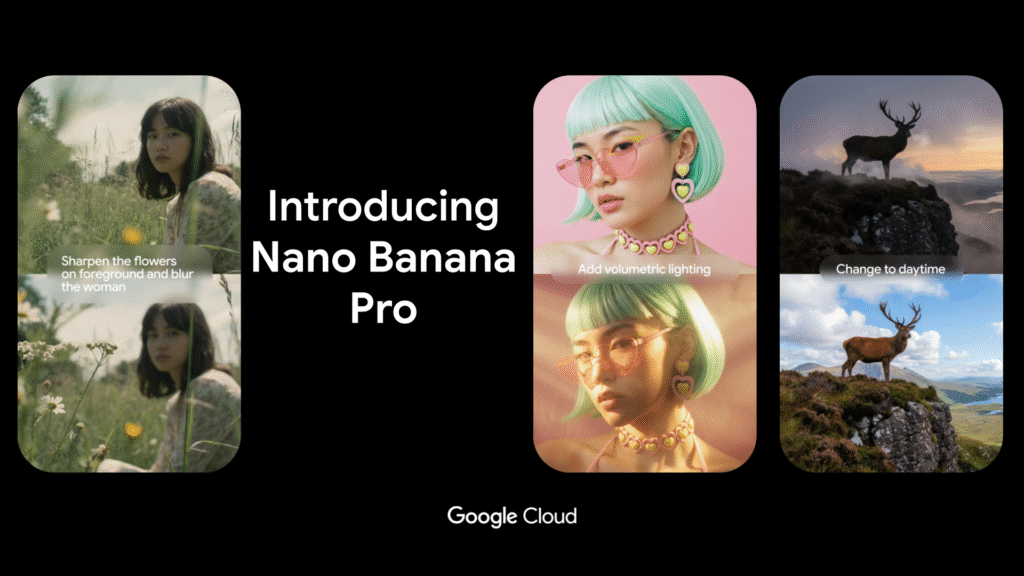
Google has officially unveiled Nano Banana Pro, an advanced visual-generation model built on the powerful Gemini 3 Pro architecture. This launch marks one of Google’s strongest moves into the professional creative-AI landscape—an industry that platforms like dicaplo.ai have closely tracked through ongoing analysis in the AI World News and AI Visual Storytelling sections.
With Nano Banana Pro, Google is positioning itself head-to-head with top-tier systems such as Midjourney, Runway, and OpenAI’s image models. It’s not just a new generator; it represents a fundamental shift in how AI understands, constructs, and enhances visual narratives.
Early reports from TechRadar, The Verge, and Business Standard emphasize that Nano Banana Pro is built for creators who demand accuracy and professional visual control. Unlike earlier models, it features improved handling of lighting, depth-of-field, perspective, and realistic textures—making it suitable for cinematic scenes, detailed character renders, and branded visual assets.
These advancements mirror many of the trends we discuss on the dicaplo.ai AI Blog, especially the rising demand for AI tools that support real production pipelines rather than quick concept sketches.
For years, AI image generators struggled with text. Letters warped, spacing collapsed, and multilingual rendering was hit-or-miss. Nano Banana Pro solves this issue with a new text-understanding layer powered by Gemini 3 Pro.
This means creators can now generate posters, covers, UI mockups, ad materials, and visual stories containing:
• Clean typography
• Non-Latin alphabets
• Brand-accurate labeling
• Multilingual headlines
This capability is especially relevant for visual storytellers—one of the core audiences reading dicaplo.ai’s AI Visual Storytelling hub.
According to Gulf News and LiveMint, Nano Banana Pro delivers 2K and 4K resolution images in its upper tiers.
High-resolution output changes the game for:
• Marketing agencies
• Film pre-production
• Publishers
• E-commerce brands
• Digital illustrators
Creators no longer need to rely on upscaling tools or manual enhancement. The images are natively crisp, detailed, and ready for editing in professional software.
One of the most impressive capabilities—highlighted by The Verge—is multi-image fusion. The model can blend up to 14 images while keeping consistent identities for up to five people.
This is transformative for:
• Series-based storytelling
• Character continuity
• Brand identity creation
• Episodic content in entertainment
It aligns naturally with the kind of multi-scene story design often explored on dicaplo.ai’s storytelling articles.
Nano Banana Pro supports region-specific editing: users can isolate a part of the image, modify just a small detail, and leave the rest untouched.
Indian Express describes this as “Photoshop-grade control built directly into the model.”
It turns the generator into both:
• A creator
• A precision editor
—and this duality is rare in today’s AI landscape.
Powered by the Gemini 3 Pro dataset and dynamic reasoning layers, the model understands real-world context.
According to Google Cloud, Nano Banana Pro can:
• Infer environmental details
• Generate scene-aware lighting and reflections
• Rebuild objects using real physical logic
• Reference factual knowledge when necessary
This leads to visuals that feel grounded rather than abstract or synthetic—a topic dicaplo.ai frequently explores when analyzing future design tools.
Google has integrated its invisible watermarking system SynthID, ensuring every image contains a cryptographic signature.
India Today notes that this is part of Google’s broader push for responsible AI.
For platforms building news, storytelling, or educational content, this watermarking approach supports transparency and long-term trust.
Based on early rollout details, users can access the model through:
• Gemini mobile and web apps
• Vertex AI for enterprise
• Google Workspace (for Docs and Slides image tools)
• Google Search (AI Mode)
• NotebookLM for research-based image generation
This gives both casual users and professionals multiple access points.
Nano Banana Pro is more than “just another image generator.”
It’s Google’s statement of intent—a direct move into the realm of professional creative tooling where precision, realism, and consistency matter as much as speed.
For creators following the evolution of AI on platforms like dicaplo.ai, this model signals the start of a new era where:
• AI collaborates with filmmakers
• Designers co-create with reasoning engines
• Brands use AI for cohesive visual identity
• Narrative worlds evolve with stable characters and settings
Visual storytelling, once limited by the boundaries of manual design, is moving toward a hybrid frontier where AI becomes a full creative partner.
Google’s Nano Banana Pro is poised to reshape how professionals create, edit, and conceptualize visual content. With its blend of high-resolution output, multilingual text rendering, identity stability, precision editing, and knowledge-driven generation, it may become one of the cornerstone tools of next-generation digital creativity.
As the creative AI landscape accelerates, platforms like dicaplo.ai will continue tracking and analyzing how technologies like Nano Banana Pro transform storytelling, design, media, and global communication.
In a groundbreaking moment for the creative tech world, Google DeepMind has announced that its AI music generator, MusicLM, has composed an original piece that won a prestigious experimental music award. The composition, titled Synthetic Pulse, blends human vocals with algorithmically generated harmony and rhythm, showcasing how AI creativity Blog is transforming the boundaries of artistic production.
Experts believe this is just the beginning. As AI models become more advanced in understanding emotional nuance, melody structure, and audience engagement, they are poised to play a major role in future media, entertainment, and advertising projects.
🔗 On platforms like DICAPLO’s AI Visual Storytelling, creators are already integrating such tools to generate cinematic scenes and immersive narrative visuals. Meanwhile, the AI Content Creation division offers brands the ability to produce adaptive copywriting and design based on emotional resonance.
Moreover, marketing experts are leveraging AI-Powered Advertising systems that blend AI creativity with strategic outreach, leading to higher user interaction and retention.
🌍 External sources like The Verge and MIT Technology Review are actively discussing the cultural impact of this shift. Industry insiders argue that the collaboration between human intuition and machine logic could lead to a new artistic renaissance.
In a major development shaking up the creative tech world, OpenAI and Adobe have officially partnered to launch a powerful AI Creative Blog Suite tailored for artists, designers, and content creators. This suite includes features like AI-powered visual composition, automatic scene styling, and emotion-driven art generation, all backed by OpenAI’s GPT-4o and Adobe’s Firefly engine.
The partnership aims to redefine what creativity means in the digital age by giving creators the ability to work in tandem with AI creativity engines that can suggest layouts, generate visual assets, write poetic copy, and even simulate audience responses.
According to Adobe’s official blog, this new toolkit is set to roll out in Adobe Creative Cloud by Q4 2025.
🎨 Platforms like DICAPLO’s AI Content Creation and AI Visual Storytelling already reflect this growing synergy between art and algorithm. For instance, creators can now generate visual stories, campaign ads, and branded animations using prompts and smart creative cues drastically cutting production time.
📈 Meanwhile, in DICAPLO’s AI-Powered Advertising system, these tools allow marketers to test visual impact in real-time, making AI creativity not just a luxury, but a business necessity.
Experts at TechCrunch and The Drum report that this move signals a new era where AI will become an “invisible co-pilot” for every creative mind helping brainstorm, polish, and perfect their visions in minutes.
“Creativity isn’t being replaced it’s being accelerated,” said Sam Altman, CEO of OpenAI.
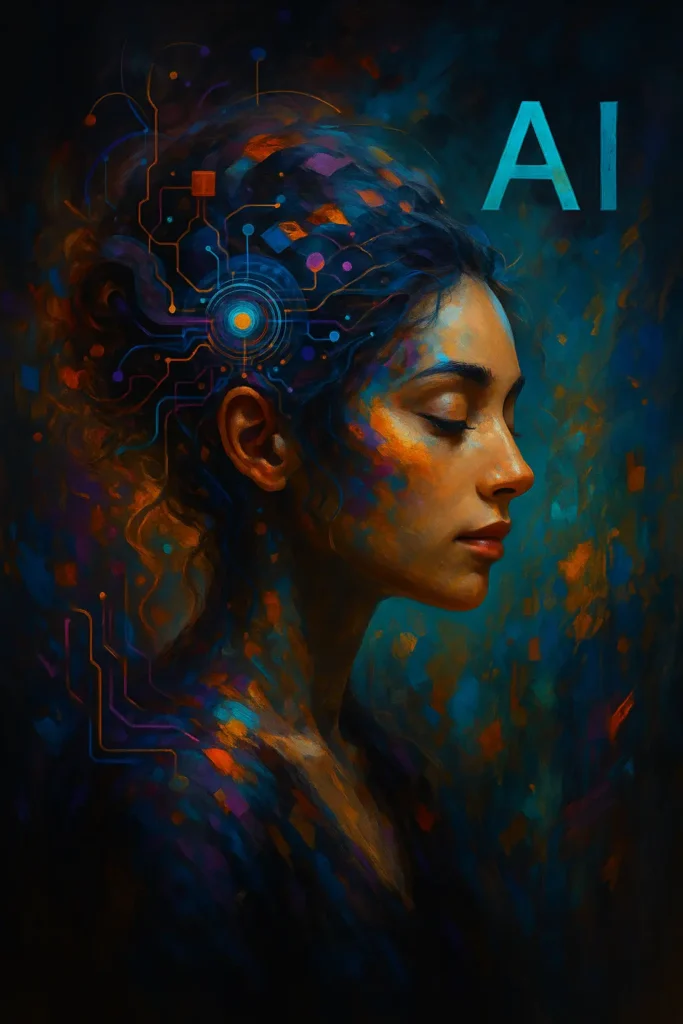
Artificial Intelligence is no longer just a tool it’s becoming a creative partner. In recent breakthroughs, platforms like DICAPLO’s AI Content Creation and AI Visual Storytelling are empowering artists and marketers alike to co-create stunning visuals, dynamic video content, and emotionally intelligent campaigns.
A new report by MIT Technology Review highlights how AI-powered creativity tools are pushing boundaries. From generative art to scriptwriting, the synergy between neural networks and human emotion is producing results that are both scalable and personal. Tools such as RunwayML and Adobe Firefly are now mainstream among digital creators.
DICAPLO has embraced this revolution through its AI-Powered Advertising and creative storytelling methods that respect both ethics and innovation. Whether you’re building an immersive brand experience or experimenting with generative aesthetics, AI Creativity Blog is helping creators move from ideas to impact faster than ever.
Experts now argue that AI Creativity should be seen as a new artistic movement, not just a technological advancement. With platforms like Google DeepDream and DICAPLO’s Website Design services, the fusion of intelligence and imagination is producing visuals once thought impossible.