
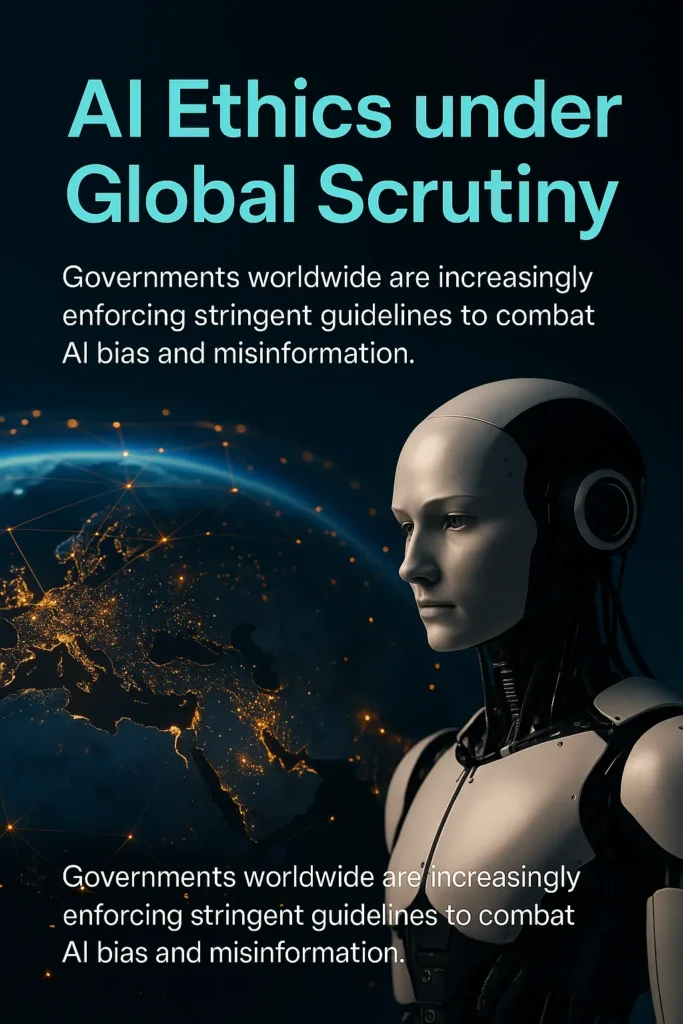
As artificial intelligence rapidly advances, the global conversation around AI Ethics Blog has intensified. Governments, tech giants, and civil society organizations are now aligning efforts to create universal ethical frameworks that safeguard humanity while enabling innovation.
This week, several international coalitions including the OECD AI Policy Observatory and the UNESCO Recommendation on the Ethics of AI renewed calls for stronger transparency and accountability in AI deployment. These frameworks aim to regulate AI’s influence on democracy, labor, creativity, and data privacy, especially in the wake of rising misinformation and deepfake technologies.
At the same time, private companies like Google and OpenAI are being pushed to disclose training data sources, bias mitigation methods, and decision-making logic in AI systems. The European Union’s AI Act, now in its final drafting stage, also represents one of the boldest regulatory attempts to classify AI risks and impose compliance on global tech providers.
Meanwhile, platforms such as DICAPLO’s AI Content Creation and AI Visual Storytelling continue to emphasize ethical implementation, promoting creative applications that remain aligned with values like transparency, user agency, and fairness.
Global watchdogs like the Partnership on AI have stressed that ethics in AI isn’t just about regulation it’s about building trust between humans and machines. As adoption accelerates across industries, from advertising to healthcare, ethical guardrails must scale accordingly.
📌 Read more about responsible AI use and its role in creative sectors on the DICAPLO Industry Blog
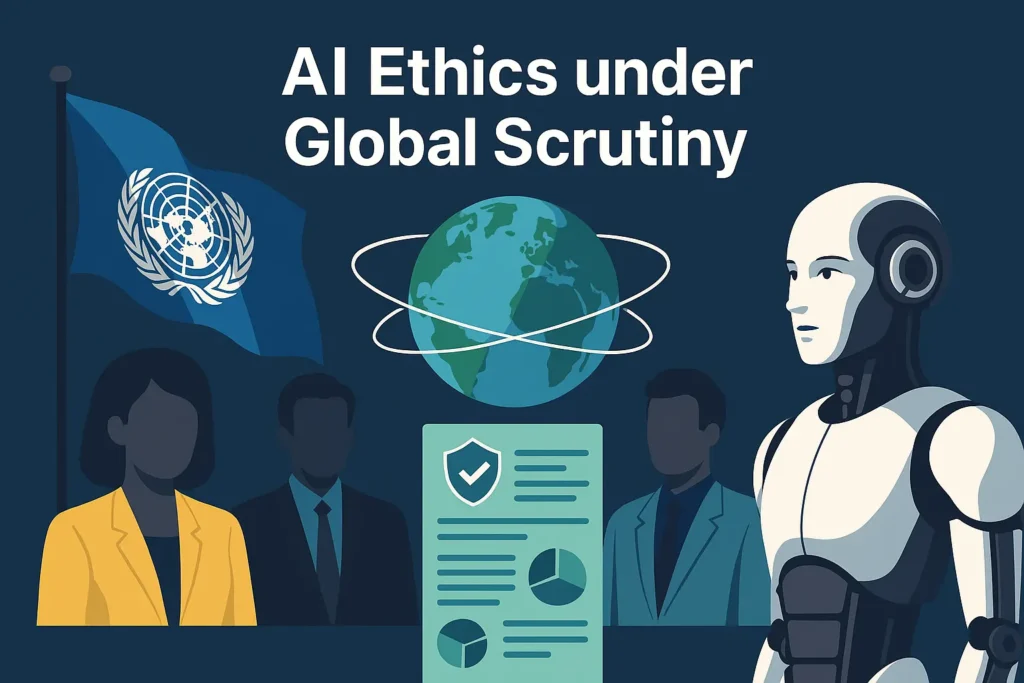
In a historic move, the United Nations has announced the initiation of a Global AI Ethics Treaty, aiming to establish universal ethical standards for the development and deployment of AI technologies. This initiative comes at a time when AI Ethics Blog is under global scrutiny, following a surge in misinformation, algorithmic bias, and misuse of generative AI.
The proposed treaty will address issues such as:
Data transparency and the right to explanation in AI systems
Ethical governance models for both public and private AI developers
Protection against surveillance misuse and algorithmic discrimination
Major countries including Germany, Japan, Brazil, and South Korea have shown preliminary support, while China and the U.S. are reportedly in advanced discussions. The UNESCO AI Ethics Framework, which has already been adopted in over 40 countries, will serve as a base model for treaty negotiations.
Meanwhile, platforms like DICAPLO’s AI-Powered Advertising and AI Content Creation demonstrate the positive impact of ethical AI use in creative industries. At the same time, AI Visual Storytelling showcases how visual transparency can align with ethical AI deployment in filmmaking.
According to The Partnership on AI, more than 80% of surveyed organizations agree that a global code of AI ethics is critical to ensure trust, fairness, and accountability.
This initiative marks a significant step forward in creating a safer, more responsible AI future, ensuring that innovation doesn’t come at the cost of human rights and ethical boundaries.
🔍 Read more on the DICAPLO Industry Blog for updates on ethical AI developments.
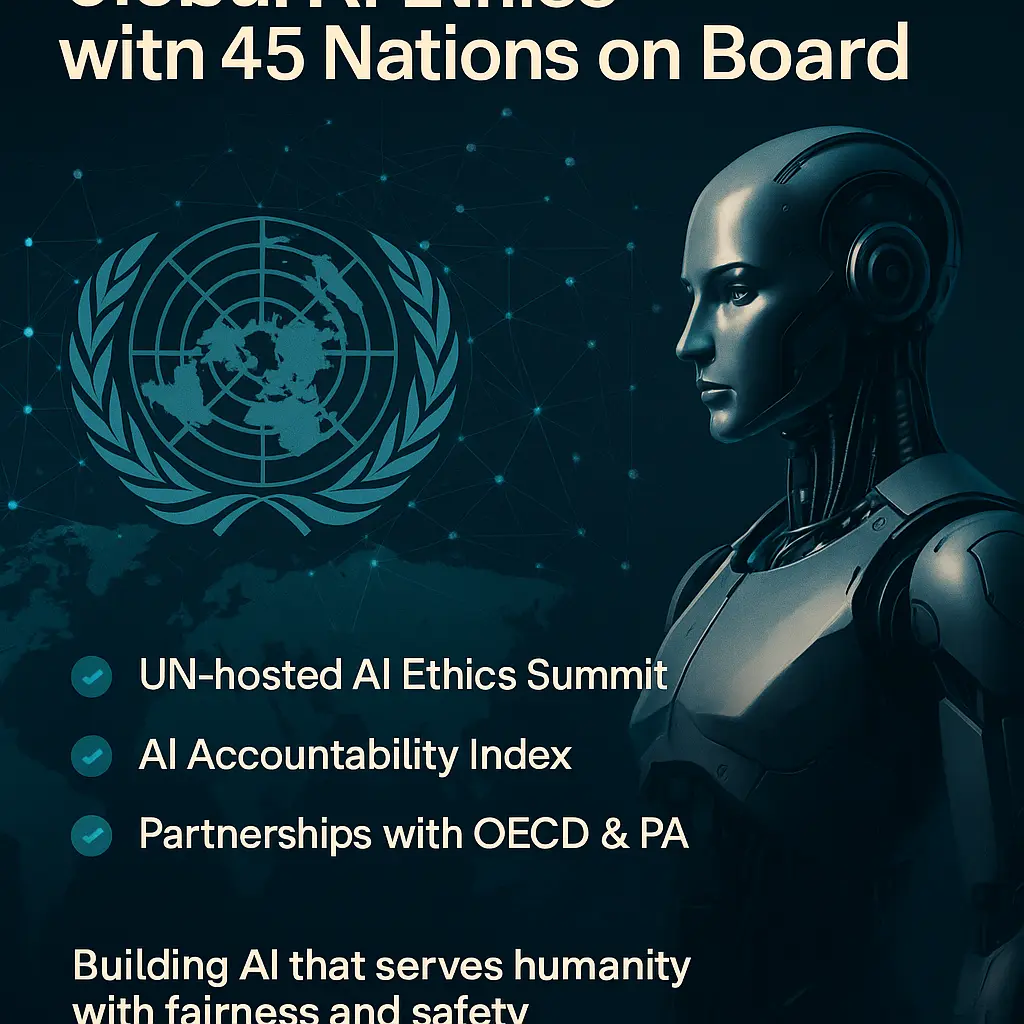
In a major step toward international AI governance, the United Nations has unveiled a new Global AI Ethics Initiative, bringing together 45 nations to collaboratively develop ethical standards and accountability mechanisms for AI systems. This framework aims to address key challenges such as bias, misinformation, surveillance misuse, and autonomous decision-making.
The initiative will include:
A UN-hosted AI Ethics Blog Summit in Geneva later this year
Creation of an AI Accountability Index
Collaboration with platforms like The Partnership on AI and OECD AI Policy Observatory
Meanwhile, platforms like DICAPLO’s AI Ethics Reports and AI Content Creation align with these global principles by integrating ethical review mechanisms in content workflows and transparent algorithms in advertising.
This marks a turning point for AI policy as global stakeholders unite under a shared mission: building AI that serves humanity with fairness, safety, and integrity.
🔍 Discover more on the DICAPLO Industry Blog for updates on global AI ethics developments.