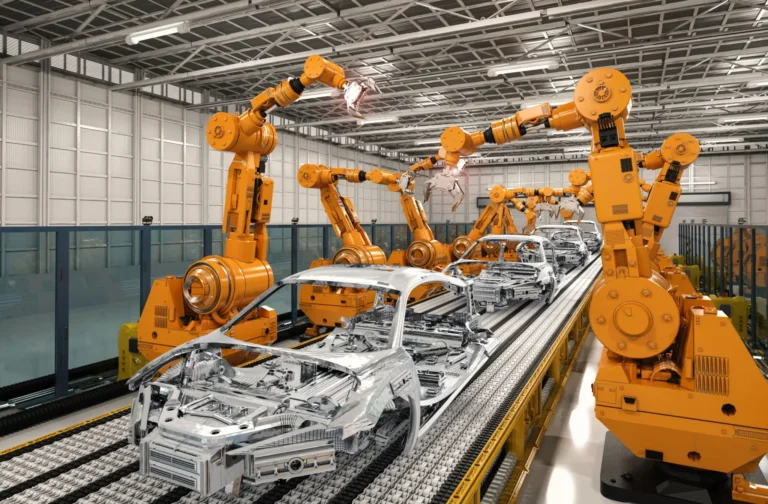
The NVIDIA + Technology Innovation Institute (TII) in Abu Dhabi have launched the Middle East’s first joint AI & Robotics lab — marking a major step toward “physical AI.” The lab will focus on advanced robotics (humanoids, robotic arms, four-legged robots) and cutting-edge AI systems, using NVIDIA’s latest chips to bring high-performance AI off the screen and into real-world machines. See more at DICAPLO AI World News.
The United Arab Emirates (UAE) is officially ranked #1 worldwide in AI adoption in the workplace. About 59.4% of the working-age population uses AI tools daily (Copilot, ChatGPT, etc.), more than any other country.
This surge reflects years of strategic investment under the country’s long-term AI agenda: expansion of cloud infrastructure, supportive regulation, AI-friendly policy, and a national-level commitment to integrate AI across government, business, education, and public services.
The AI revolution isn’t just about software anymore — we’re witnessing the dawn of “physical AI”: intelligent machines and robots powered by AI, blurring the line between digital and physical automation. Regions like Middle East and beyond are investing heavily in this next wave.
For broader coverage of AI’s global impact — trends, innovations, visual-storytelling, and more — check out DICAPLO and their services:
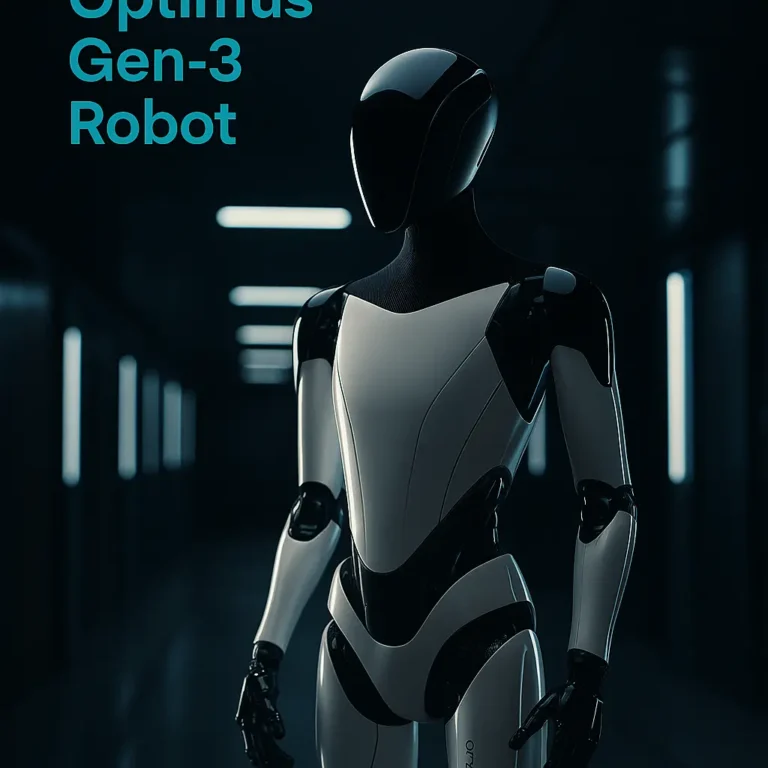
In a groundbreaking step for AI Robotics, Tesla has officially introduced Optimus Gen-3 a highly advanced humanoid robot featuring enhanced agility, real-time adaptive control, and reduced weight for dynamic interaction with real-world environments. Designed to work seamlessly in warehouses, factories, and even creative industries, the Optimus Gen-3 represents Tesla’s strongest push yet toward robotic autonomy powered by artificial intelligence.
The robot’s capabilities are driven by Tesla’s Full Self-Driving (FSD) neural networks, now adapted for humanoid locomotion. It can pick up fragile objects, maintain precise balance, and learn tasks through reinforcement learning, making it ideal for future enterprise, health care, and even creative AI visual storytelling.
🔍 Platforms like DICAPLO AI Visual Storytelling and AI Content Creation are already exploring how such robots can be utilized in futuristic cinematic productions, branded experiences, and interactive storytelling.
Meanwhile, discussions around ethics and design continue to grow. Leading organizations like The Partnership on AI and MIT CSAIL are emphasizing transparency, safety protocols, and cross-domain collaboration for the responsible development of intelligent robots.
🌐 For marketers and creatives, this innovation opens new frontiers in AI-powered advertising, which DICAPLO explores extensively here, and for web experiences through intelligent website design.
Explore more on DICAPLO’s Industry Blog or follow Tesla’s robotics updates via their official AI page.
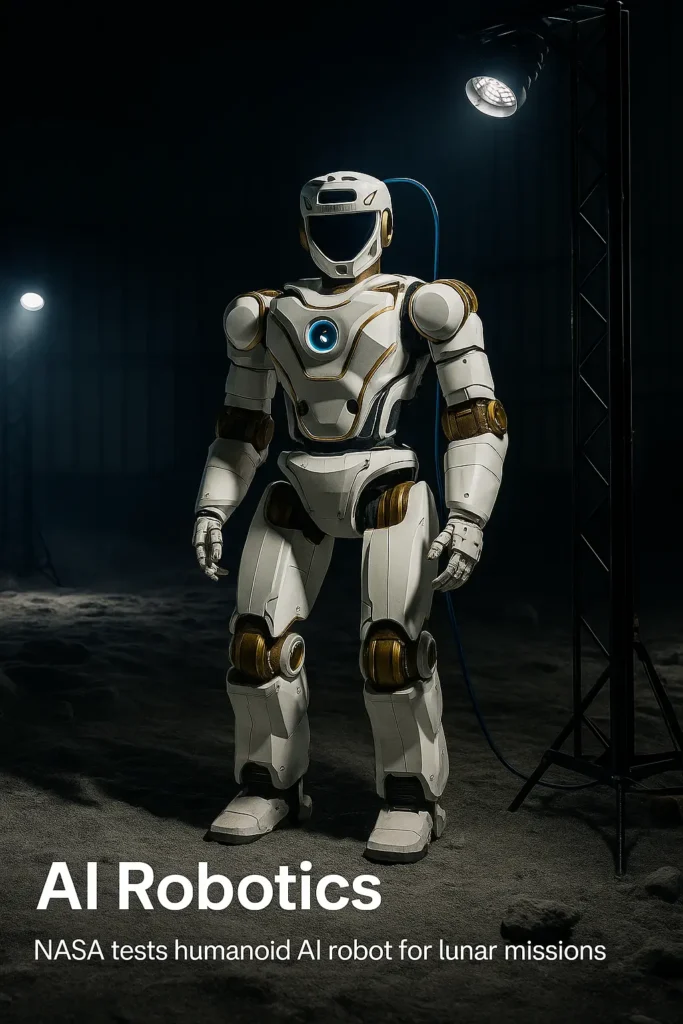
NASA has begun field-testing a new AI Robotics system named VALKYRIE, a humanoid robot designed to assist astronauts during future lunar and Martian missions. Equipped with machine learning, environmental sensors, and advanced robotic articulation, VALKYRIE can navigate rough terrain, conduct scientific tasks, and even respond to voice commands in real-time.
This innovation represents a major step toward autonomous exploration, combining NASA’s robotic research with artificial intelligence ethics standards co-developed with partners like OpenAI and IEEE Global Initiative on Ethics of Autonomous Systems.
🌌 For creatives and tech enthusiasts, platforms like DICAPLO AI Content Creation and AI Visual Storytelling explore how robotics and narrative can merge in space-themed simulations and virtual filmmaking. The future of storytelling may well include humanoid collaborators.
🔍 Read more on the DICAPLO Industry Blog or follow updates via NASA’s Robotics Division.
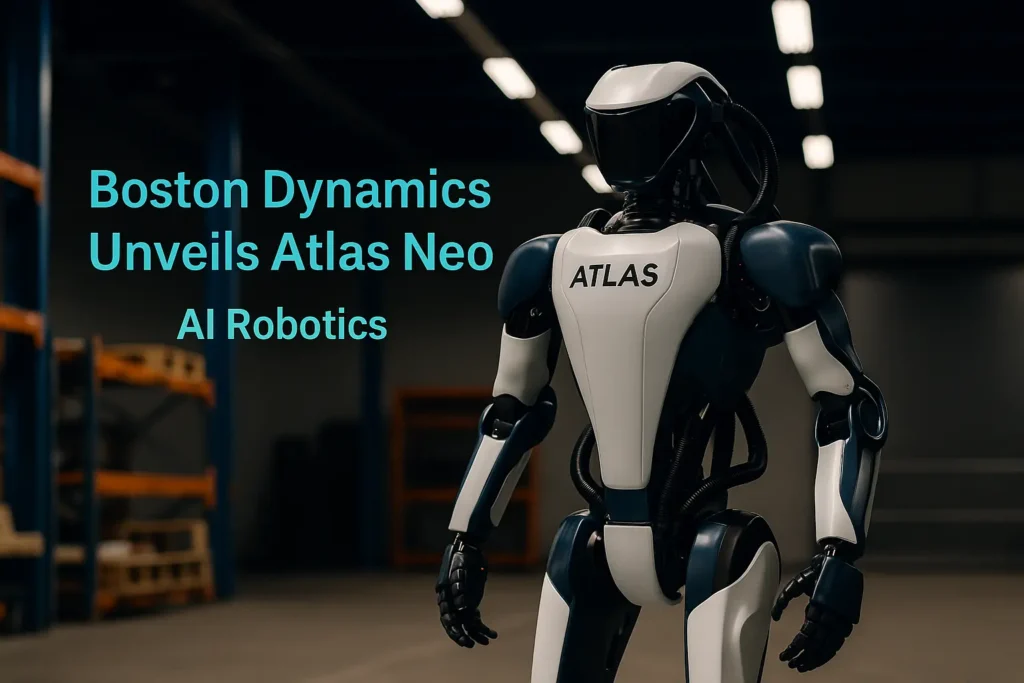
In a major leap for AI Robotics, Boston Dynamics has revealed Atlas Neo, its first fully electric humanoid robot. This advanced robot combines AI-powered balance, human-like agility, and real-time perception, making it ideal for industrial and cinematic applications.
The company states that Atlas Neo is designed to operate seamlessly in unpredictable environments, aligning with the growing need for ethical and responsive AI in robotics.
Meanwhile, platforms like DICAPLO’s AI Visual Storytelling and AI Content Creation emphasize how such innovations in robotics can inspire futuristic narratives and smart automation strategies in media and marketing.
As AI Robotics continues to evolve, companies are encouraged to explore DICAPLO’s Industry Blog for updates or visit IEEE Spectrum to explore the broader impact of robotics on society
In a bold step toward the future of robotics, Boston Dynamics has unveiled Atlas Neo, the latest evolution of its iconic humanoid robot. Unlike its predecessors, Atlas Neo is fully electric, ditching hydraulic systems in favor of cleaner, more efficient motion control. The robot features enhanced agility, precise real-time balance, and AI-driven decision-making capabilities, enabling it to perform complex tasks in dynamic environments.
What sets Atlas Neo apart is its seamless AI integration. Equipped with advanced computer vision and natural motion planning, it can now interact more naturally with humans and objects in industrial, medical, or rescue scenarios. This aligns with the growing AI Robotics trend to make robots more adaptable and autonomous in real-world applications.
Industry experts suggest that Atlas Neo could lead the next generation of AI-powered automation in warehousing, logistics, and even film production, opening doors for cinematic use in AI Visual Storytelling.
🌐 For deeper insight into Atlas Neo’s applications, explore AI-Powered Robotics in Industry or read the DICAPLO Blog on AI in Filmmaking, where robotics meet creativity.
As AI Robotics continues to evolve, Atlas Neo is more than just a machine it’s a symbol of what’s possible when AI meets engineering excellence.